Bangladesh lifts garment workers' minimum wage 36% after weeks of protests
A wage board vote sets the monthly floor at 17,000 taka from December 1, short of the 18,000 taka workers had sought.
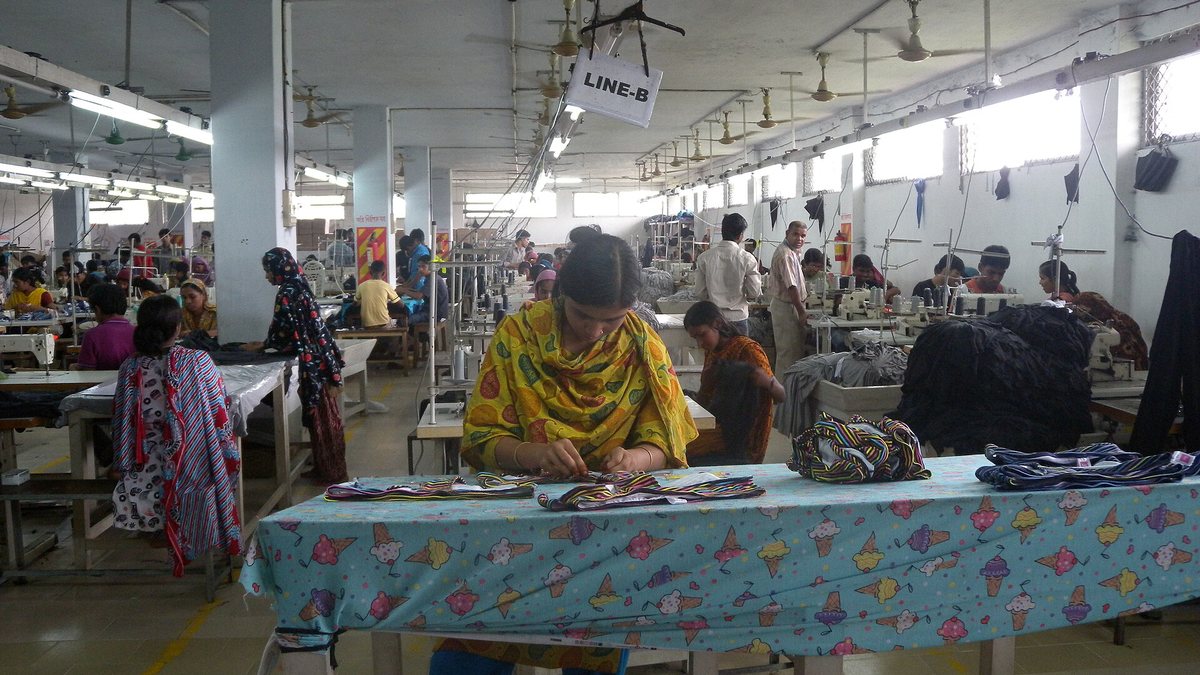
Bangladesh's garment workers will get a minimum monthly wage of 17,000 taka (US$139) from December 1. The figure is a 36 per cent rise on the current 12,500 taka and was set by a government-appointed wage board early on Wednesday. CNA and The Straits Times, both carrying a Reuters report, said it was the smallest increase in more than a decade.
The board approved the new structure at about 2am after nearly 12 hours of talks between workers' and employers' representatives. Workers' representative Babul Akhter said the six-member board, which includes two worker and two employer representatives, voted 4-2. The two dissenting members backed the workers' demand for 18,000 taka.
Board chairman Judge Syed Azad Subhani said the "majority supported a minimum wage of 17,000 taka", The Hindu reported. Mr Akhter told reporters: "Although we are not completely satisfied, the outcome is not entirely bad either." He said wages used to be revised every five years, but this revision came after three. Workers' representatives urged people to return to the factories once the deal was struck.
The outlets differ on where negotiations began. CNA and The Straits Times reported that workers first sought 32,000 taka before lowering their demand to 18,000, while factory owners opened at 15,000 and later offered 17,000. The Hindu put the workers' initial demand at 30,000 taka (US$240).
Under the new four-grade structure, monthly pay ranges from 17,000 taka for Grade 4 workers to 21,500 taka for Grade 1. CNA and The Straits Times said earlier rises were 56 per cent in 2023, 51 per cent in 2018 and 77 per cent in 2013.
Protests since October have shut factories, blocked highways and led to clashes with police. Workers say their pay has not kept up with the cost of food, housing, transport and health care, according to The Hindu. The Bangladesh Garment Manufacturers and Exporters Association (BGMEA) said 397 factories could not operate on Tuesday and another 84 stayed closed under the labour law's "no work, no pay" provision. A BGMEA survey estimated that 317 factories lost about US$428 million in production over 18 days of disruption, and that buyers moved orders worth about US$254 million to other countries.
The sector employs more than four million people and earns more than 80 per cent of the country's export income. The Hindu said it brings in around US$38 billion a year and that Bangladesh is the world's second-biggest garment exporter after China. CNA and The Straits Times listed H&M, Zara, Walmart, Target and Gap among its customers. The Hindu named Fruit of the Loom and Levi Strauss.
Factory owners have warned that further increases could raise production costs and hurt competitiveness. Labour rights groups argue that higher pay is needed to protect workers' living standards. CNA and The Straits Times reported that the modest rise may not be enough to end the unrest.
The new wage structure takes effect on December 1, and workers are expected to receive the revised pay from January.
Sources: CNA, Bangladesh raises garment workers' minimum wage 36% after protests; The Hindu, Bangladesh garment workers win 36% wage rise; The Straits Times, Bangladesh raises garment workers’ minimum wage 36% after protests.