Pakistani pilot becomes first foreign astronaut on China's Tiangong station
Air force pilot Muhammad Zeeshan Ali flew on Shenzhou-24 and is due to spend about a week aboard China's space station.
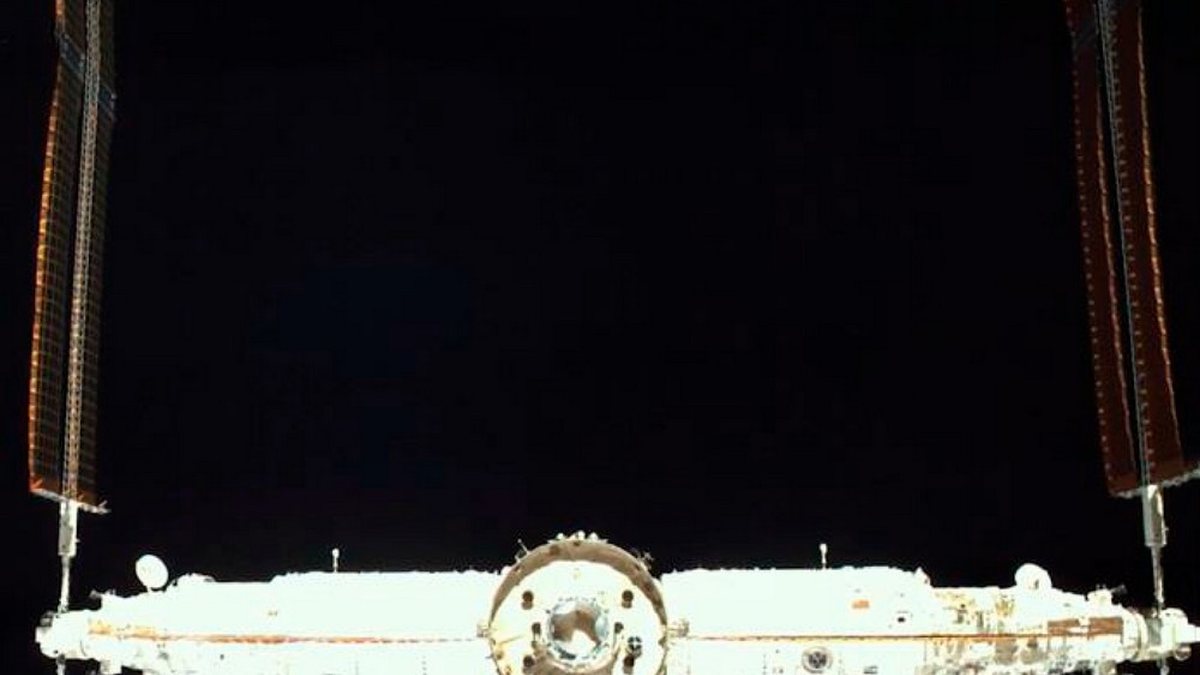
China launched its Shenzhou-24 mission on Wednesday with Pakistan Air Force pilot Muhammad Zeeshan Ali aboard. He is the first foreign national to fly on a Chinese crewed mission and the first non-Chinese astronaut to board the Tiangong space station, the BBC, The Hindu, The Guardian and The Straits Times reported.
A Long March-2F rocket lifted off from the Jiuquan Satellite Launch Center in north-west China at 08:18 local time (00:18 GMT), and officials declared the launch a success minutes later. The Guardian reported that the spacecraft docked about three and a half hours later. China's space agency described the crew's embrace as Ali floated through the hatch as the country's first foreign "space handshake".
Ali, 40, is flying as a payload specialist alongside commander Tang Hongbo and flight engineer Wu Yi. Speaking before the launch, he said he was carrying "the hopes of 250 million Pakistanis", the BBC reported. Pakistan's Prime Minister, Shehbaz Sharif, wrote on X that "this is not just one astronaut's journey, but the journey of 240 million Pakistanis", according to The Hindu.
Muhammad Yousaf Khan, head of Pakistan's space agency SUPARCO, told AFP, in a report carried by The Straits Times, that Ali would run four experiments, among them studies of microalgae, self-healing materials for spacecraft and growing quinoa. Pakistani universities submitted more than 300 proposals. Chinese officials told The Hindu that more than 90 experiments and technology tests were planned across the whole mission.
SUPARCO said more than 50 candidates were screened and 19 were sent to China for tests. Two were picked: Ali and a navy officer, named by The Straits Times as Khurram Daud and by the BBC as Khurram Dawood. Training ran about seven months and included centrifuge and underwater drills as well as intensive Chinese-language classes.
In Islamabad, hundreds of scientists, students and officials packed the SUPARCO auditorium for the 5.18am launch, Pakistan time. Ali is the first Pakistani to reach orbit. Adventurer Namira Salim went to space on a commercial suborbital flight in October 2023.
The flight follows an agreement the two countries signed in February 2025. The Guardian reported that President Xi Jinping told his Pakistani counterpart Beijing was "willing to work with all countries" on the peaceful use of outer space. The Guardian also reported that a Pakistani-built rover is due to fly on a Chinese lunar mission around 2028.
The launch comes as the International Space Station nears retirement. The Guardian cited NASA as saying it would cease operations from 2030, while The Hindu cited reports of a retirement in early 2031. Blaine Curcio of Orbital Gateway Consulting told The Guardian he expected countries such as Brazil and Egypt to seek places on Chinese missions.
Ali is due to return to Earth on the Shenzhou-23 spacecraft with two members of that crew. Its commander, Zhu Yangzhu, will remain aboard with Tang and Wu. The Guardian reported that Zhu is aiming for the first full-year stay in space by a Chinese astronaut.
Sources: BBC News, China's Shenzhou-24 carries Pakistan's first astronaut into space; The Hindu, China launches crewed spaceship carrying first Pakistani astronaut to its space station; The Guardian, China sends first foreign astronaut to ISS rival as it globalises space operations; The Straits Times, ‘Made history’: Pakistan cheers as astronaut flies pioneering mission on Chinese space station.