Sonia Gandhi memoir describes why she refused to become prime minister in 2004
Belonging, the former Congress leader's memoir, covers two family assassinations, her 2004 decision and a blunt portrait of Narendra Modi.
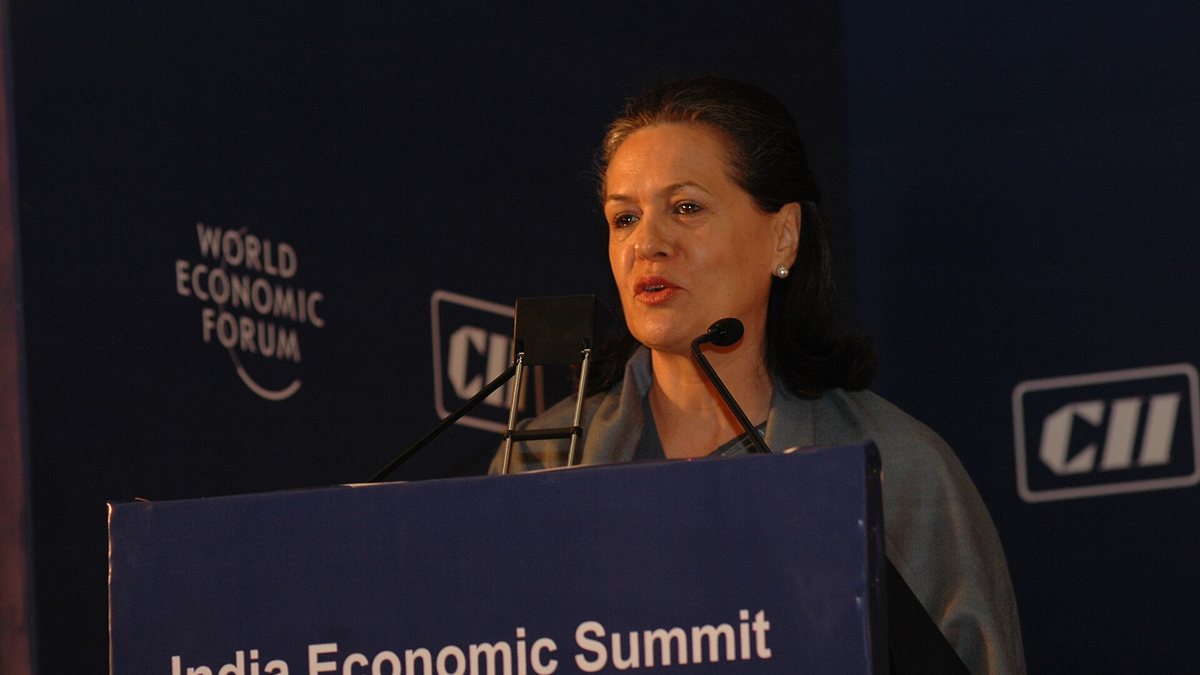
Sonia Gandhi writes that she turned down India's prime ministership after leading Congress to victory at the 2004 election because she believed the Bharatiya Janata Party (BJP) would keep exploiting her foreign birth, according to a BBC News account of her new memoir, Belonging: A Journey of Love.
The BBC reported that alliance leaders surrounded her and one insisted: "We will not take no for an answer." Overwhelmed, she murmured "Theek hai", meaning all right, and they began congratulating her. Her son Rahul came in asking: "You said yes?" After a long night arguing with herself, friends and family, she told him she would stick to her stand. She chose Manmohan Singh, whom she describes as a man "above reproach".
The 502-page book also returns to 31 October 1984, when Indira Gandhi was assassinated by two of her Sikh bodyguards at the prime minister's residence in Delhi. Sonia writes that she saw her mother-in-law lying covered in blood in a car. When her husband Rajiv said party leaders wanted him to become prime minister, she pleaded: "They will kill you; they will kill you, too!" He replied: "They will kill me anyway." He was sworn in that evening. Rajiv was assassinated in 1991.
She writes that she had "always disliked politics" and at first refused calls to step in as Congress lost ground. Private lessons on the Bhagavad Gita with a Sanskrit scholar in January 1997 eventually resolved her doubts, she says.
Her account of Prime Minister Narendra Modi is unusually direct, the BBC said. The two have had "practically no real contact", she writes, adding: "He tends to look away." She says his idea of India was shaped by the Rashtriya Swayamsevak Sangh and is one of "hierarchy, order, and control". She also concedes he "had certainly worked his way to power within the RSS from an underprivileged world".
The memoir describes Vladimir Putin as an "engaging personality" who took her on a boat ride in St Petersburg, and recalls France's Nicolas Sarkozy being questioned at a 2008 state banquet about when he planned to marry Carla Bruni.
The BBC said the book is not a neutral history. In its assessment, the Bofors gun scandal gets relatively brief treatment and the memoir largely sidesteps the patronage, cronyism and corruption that dogged Congress in power. NDTV focused on the book's picture of an older Delhi of quiet roads and ice cream at India Gate, comparing it with the city in Paranjpye's film Chashme Buddoor.
Sonia, 79, is now a member of the Rajya Sabha. Rahul, 55, is leader of the opposition. She ends the book writing: "At this moment it seems to me that, although I tried my best, I didn't succeed in beating back the forces I'd set out to fight."
Sources: BBC News, 'They will kill you too': Sonia Gandhi's turbulent journey in Indian politics; NDTV, In Sonia Gandhi's 'Belonging', The Delhi Of 'Chashme Buddoor': How A Lost City Is A Character In Both.