Sri Lankan fishers blame Mannar wind turbines for falling catches and floods
Residents of the Mannar peninsula want state-owned turbines removed, and the government has frozen new wind projects in the area.
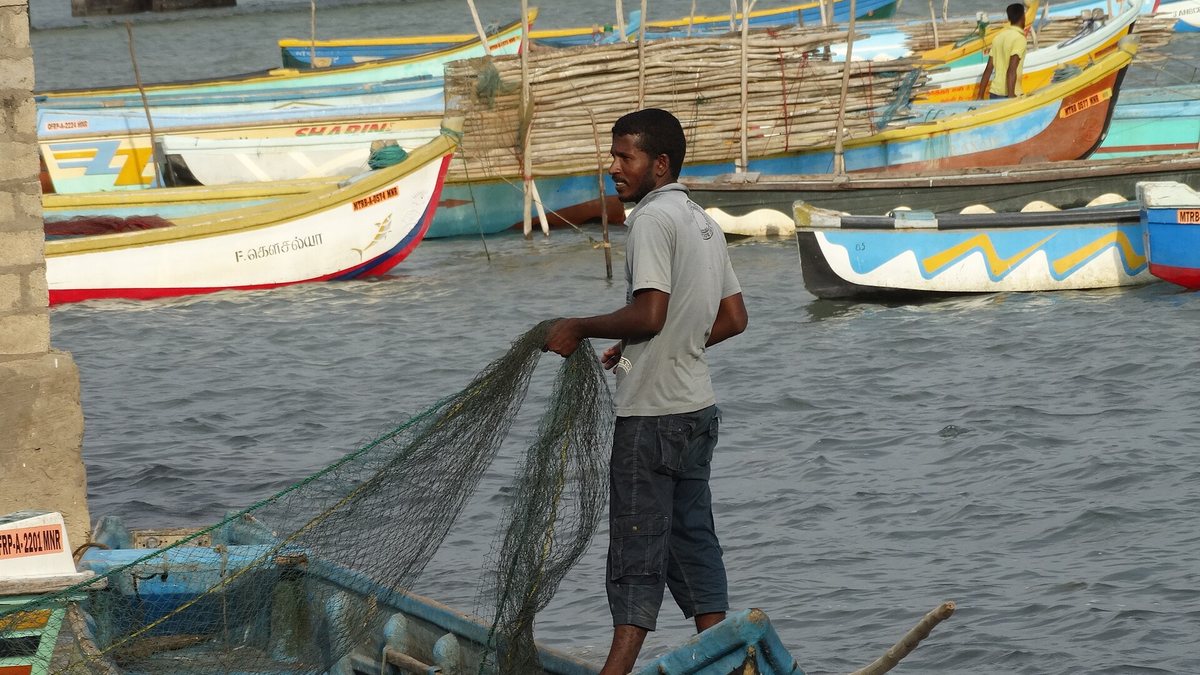
Fishers on Sri Lanka's Mannar peninsula, across a narrow gulf from India, say a wind farm run by the state is to blame for poorer catches and monsoon floods in their villages, according to an AFP report carried by CNA and The Straits Times. Locals want the turbines taken down or, failing that, no new ones put up.
Venkatasamy Kalimuththu, 65, has worked these waters since childhood. "Before the wind turbines were installed, we caught a lot of fish," he said. "Now, much less." He concedes he cannot prove it but believes shadows from the turning blades stop fish coming into shallow water. Other fishers also point to the turbines, and to rivalry from Indian trawlers.
A Stanislas Peries, who leads the fishermen's cooperative in nearby Pesalai, said a day on the water once paid as much as 5,000 rupees but now earns little over 1,000. The outlets converted the larger sum differently: US$15 in CNA's version, S$19 in The Straits Times'.
The Ceylon Electricity Board owns the turbines. Its first 30, able to produce 104 megawatts between them, began feeding the grid in 2020. Work on 14 more is now under way. Indian conglomerate Adani won a third stage of 52 turbines, but in 2025 the government scrapped that deal following disagreement over the rate per kilowatt-hour.
Benedict Mary Vijiliya, president of the Women's Rural Development Society, lives in a village about 100 metres back from the shore and ringed by turbines. In her view, the concrete bases and the trenches dug for access roads block rainwater from running off into the sea. "During the monsoon rains, the water comes up to our waists and the toilets overflow," she said. That never happened before 2020, she said, and she can no longer drink from her well.
Lesley Jesurajan, a prominent member of the civil society group OPEnE, said opponents had no objection to clean power as such. The problem was the location, Jesurajan said, as turbines could be put up in many other places.
War in the Middle East is pushing up fuel and power prices in Sri Lanka. The government wants renewables to supply 70 per cent of national electricity by 2030, yet it has paused any new projects in Mannar. Energy Minister Anura Karunathilaka said feasibility studies were being carried out and putting their findings into effect could ease the flooding. Only schemes that already had approval would proceed, he said.
Father S Marcus, the Catholic priest who leads the Mannar Citizens' Committee, said past pledges to limit the damage had produced nothing. Residents have lodged two complaints with Sri Lankan courts at his urging, and a separate complaint has since been lodged against Marcus himself. "We will not back down," he said.
Sources: CNA, Sri Lankan turbine project fuels anger as fish hauls plunge; The Straits Times, Sri Lankan turbine project fuels anger as fish hauls plunge.