Why China pairs Taiwan sea patrols with peace talk before APEC
Coast guard patrols east of Taiwan and a G7 rebuke frame Xi's call for peaceful reunification, a week before China hosts APEC in Shenzhen.
What is happening?
China is putting pressure on Taiwan in two ways at once ahead of the APEC leaders' summit it hosts in Shenzhen next week. Its coast guard keeps patrolling waters off Taiwan's east coast. Meanwhile President Xi Jinping on Thursday spoke of "peaceful reunification" and made no mention of force.
The two came together on the same day. In Beijing's Great Hall of the People, Xi said the "complete reunification of the motherland must be realised, and it will certainly be realised", and called it an "unwavering historical mission" of the Communist Party. The same day, Taiwan's Defence Ministry counted 29 Chinese military aircraft around the island, J-16 fighters and drones among them, flying a "joint combat readiness patrol" alongside Chinese warships, CNA and The Straits Times reported.
The speech did not move Taipei. "As for the wording on Taiwan unification, it isn't much different from the past," said Liang Wen-chieh, spokesman for the Mainland Affairs Council. CNA reported the council as saying "one country, two systems" was unacceptable to both the government and the people of Taiwan, because in the end it would mean giving in to authoritarian rule by the Communist Party.
What is China doing in the waters east of Taiwan?
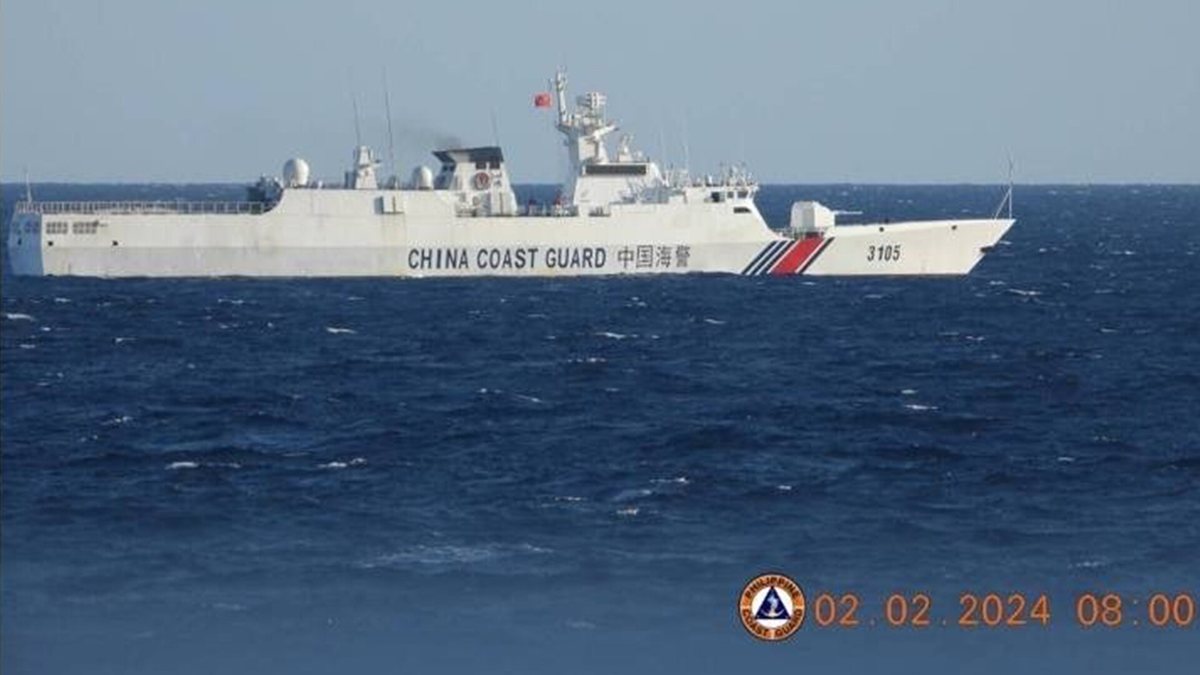
China has run regular coast guard patrols off Taiwan's east coast since June, and Taiwanese officials believe Beijing is practising for a possible maritime blockade. They say it is using a mix of military, paramilitary and civilian assets. Taipei regards these waters as its wartime supply route from allies if a blockade or conflict breaks out.
China announced its latest patrol on October 31. Taiwan's Coast Guard said it involved two ships. Chinese state media aired video of one ship telling vessels by radio that it was enforcing the law and would help anyone who needed it. The footage showed an unidentified fishing trawler. Taipei's coast guard called the broadcasts "a clear expansion of power" in breach of international law, and accused Beijing of trying to exert a fictional jurisdiction. "China has absolutely no jurisdiction over any of Taiwan's waters," it said.
The radio message sounded mild. Its meaning is harder to dismiss: a law enforcement broadcast to a passing boat asserts authority over that stretch of sea. Repeated on a regular schedule, it suggests an effort to make that assertion routine. Other recent activity points the same way. On October 31 a second Chinese coast guard ship went close to the Taiwan-controlled Pratas Islands, more than 400 kilometres from Taiwan, where Taipei says it has "expelled" Chinese vessels 13 times this year. On November 10 Defence Minister Wellington Koo said China was carrying out "area denial" drills in the Western Pacific with one of its aircraft carriers.
Why should Australians pay attention?
The G7 described the issue in terms of shipping, which makes it relevant well beyond the Taiwan Strait. In a joint declaration after talks in Paris, published late on November 11, the G7 foreign ministers said China's activities east of Taiwan "threaten regional stability, freedom of navigation and the safety of international shipping". The Straits Times, carrying a Reuters report, called it the strongest unified expression of concern about the activity so far.
Beijing rejected it. Foreign Ministry spokesperson Mao Ning said the statement proved the G7 was "an ideological clique clinging to Cold War mentality and engaging in bloc politics", The Straits Times reported. Taiwan's presidential office welcomed the statement and said Taiwan would keep working with like-minded partners, including G7 members.
For readers in Australia, the issue is precedent. The G7 restated its opposition to changing the status quo "by force or coercion, or the threat thereof". These patrols put that principle to work at sea, on a route Taipei treats as a lifeline. If coast guard law enforcement claims east of Taiwan come to be treated as normal, the norm on navigation that the G7 invoked would be harder to apply.
The summit has its own Australian thread. Taiwan's envoy to Shenzhen, Acer founder Stan Shih, 81, last represented the island at APEC in 2007, when the summit was held in Sydney.
What happens next?
The first test is the Shenzhen summit next week. Presidential Office spokeswoman Karen Kuo said Taiwan wants a written guarantee from China that its delegation can attend all meetings "under conditions of equality, dignity and security". China's Taiwan Affairs Office said "Chinese Taipei may attend meetings" as long as the one-China principle and the practices of the APEC memorandum of understanding are followed. Taiwan's labour and finance ministers attended APEC meetings in China this year without incident. Foreign Minister Lin Chia-lung said, however, that the summit invitation came by email rather than being delivered in person by an official.
US President Donald Trump is expected to meet Xi in Shenzhen, their third meeting this year. The Straits Times reported that Taiwan's envoys usually use the summit to talk with senior delegates from friendly countries such as the United States and Japan.
Taiwan holds local elections a little more than two weeks from now. Beijing calls President Lai Ching-te a "separatist" and refuses to talk to him. Lai's position is that Taiwan's future is for its people alone to decide. Nothing in the reporting so far says whether the patrols east of Taiwan will pause during summit week or keep the pace China has set since June.
Our reporting on this story
- Taiwan accuses China's coast guard of harassing shipping off its east coast
- G7 ministers say China's moves east of Taiwan threaten regional stability
- Xi says Taiwan "reunification" will happen, makes no mention of force
- Taiwan sends Acer founder Stan Shih to APEC in China, seeks written guarantee
Sources: The Japan Times, Taiwan says China harassing shipping with east coast patrol; The Hindu, Taiwan says China harassing shipping with east coast patrol; The Straits Times, Taiwan says China harassing shipping with east coast patrol; The Straits Times, G-7 foreign ministers say China’s actions east of Taiwan threaten stability; The Hindu, G7 Foreign Ministers say China's actions east of Taiwan threaten stability; CNA, Chinese President Xi Jinping says Taiwan 'reunification' must happen as history cannot be stopped; The Straits Times, China’s Xi says Taiwan ‘reunification’ must happen as history cannot be stopped; The Straits Times, Taiwan appoints Acer founder as APEC envoy, calls for written guarantees from China; CNA, Taiwan sends Acer's Stan Shih to represent it at APEC summit in China.