- Officers of CGST Mumbai have arrested two businessmen for creating fictitious invoices and availing ineligible credit. The persons have been arrested for availing input tax credit on the basis of fraudulent invoices against which no actual goods were bought or sold.
- The power to arrest is provided under Section 69 of the CGST Act, 2017 and is to be exercised by the Commissioner in cases of outright fraud where the amount of tax evaded or the amount of input tax credit wrongly availed exceeds Rs. 2 crore.
The Government wants to assure taxpayers that compliant taxpayers do not run the risk of facing such punitive action in carrying-out their day to day operations. The power to arrest is to be exercised where there is deliberate fraud of sizeable magnitude with intent to evade tax. It is meant to serve as a deterrent to unscrupulous elements in trade who may try to defraud the system. There are sufficient checks built into the law to ensure that inadvertent or procedural lapses do not attract severe punitive measures.
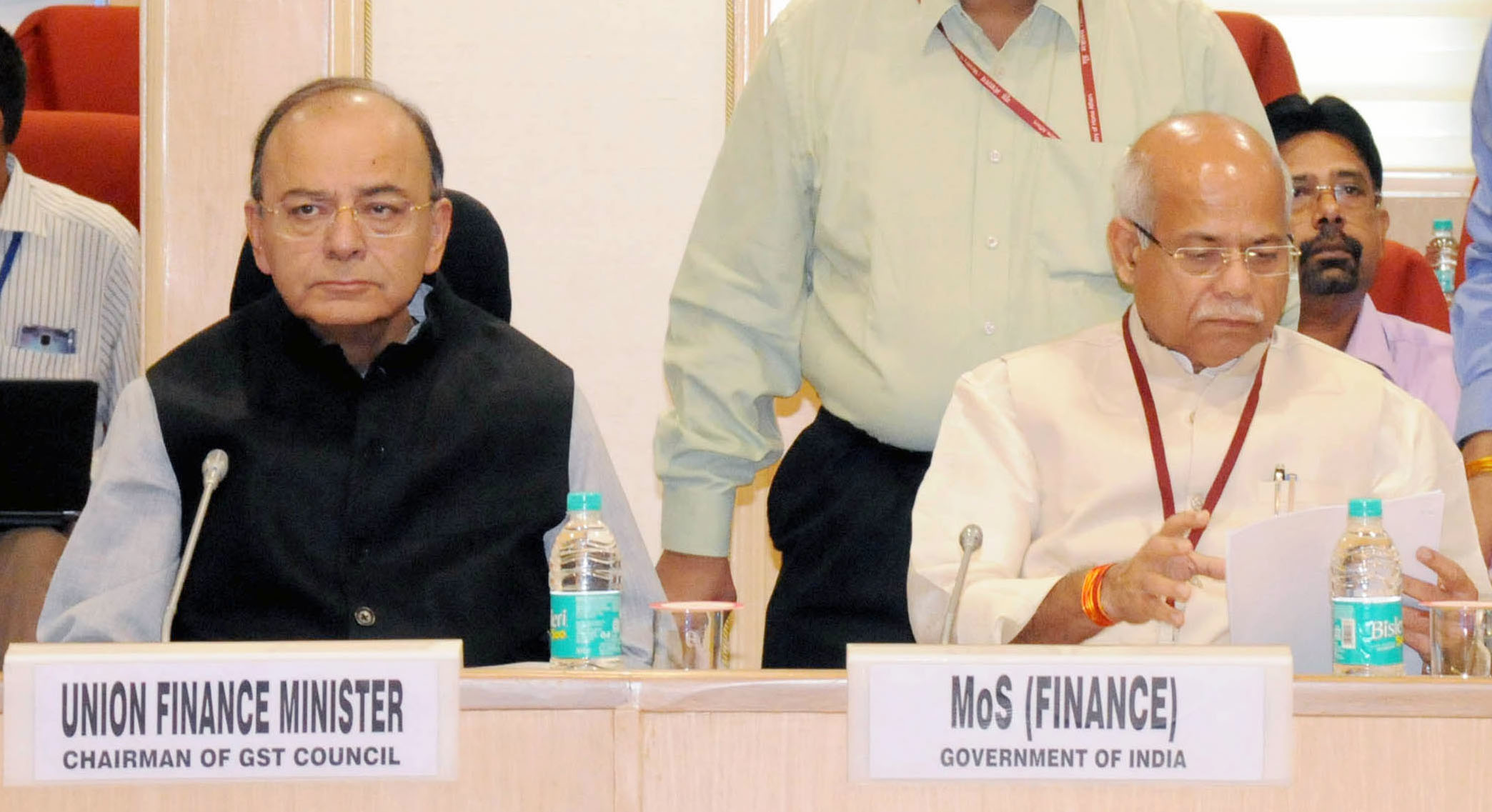
The Union Minister for Finance and Corporate Affairs, Shri Arun Jaitley chairing the 22nd GST Council meeting, in New Delhi on . The Minister of State for Finance, Shri Shiv Pratap Shukla is also seen.
CBDT achieves milestone of 200 APAs
- The Central Board of Direct Taxes (CBDT) entered into seven more Advance Pricing Agreements (APAs) during the month of February, 2018. All the seven are Unilateral APAs. With the signing of these Agreements, CBDT has crossed an important milestone of having signed 200 APAs.
- The total number of APAs entered into by the CBDT till date has gone up to 203. This includes 185 Unilateral APAs and 18 Bilateral APAs. In the current financial year, the CBDT has entered into 51 APAs so far (44 Unilateral APAs and 7 Bilateral APAs).
- The seven APAs signed in February pertain to the Pharmaceuticals, Automobiles, Financial and Food & Beverages sectors of the economy. The international transactions covered in these agreements include Manufacturing, Provision of Software Development Services, Provision of IT enabled Services, Payment of Royalty, Provision of Contract R&D Services, Provision of Marketing Support Services, Distribution, AMP Expenses, Provision of Engineering Design Support Services, Provision of Sourcing Support Services, Payment of Interest, etc.
- The APA provisions were introduced in the Income-tax Act, 1961 in 2012 and the “Rollback” provisions were introduced in 2014. The APA scheme endeavours to provide certainty to taxpayers in the domain of transfer pricing by specifying the methods of pricing and setting the prices of international transactions in advance.
- The progress of the APA scheme strengthens the Government’s resolve of fostering a non-adversarial tax regime. The Indian APA programme has been appreciated nationally and internationally for being able to address complex transfer pricing issues in a fair and transparent manner. It has contributed significantly towards improving the ease of doing business in India.
 www.asiatimes.com.au News and Views from Asia Pacific